I’m reviewing guest posts for a neighborhood gardening site, usually at my kitchen table before work. I tried several AI content detectors on my own drafts and contributor submissions, but the scores changed after minor punctuation edits and gave little explanation. Which detectors should I try next for consistent, interpretable results?
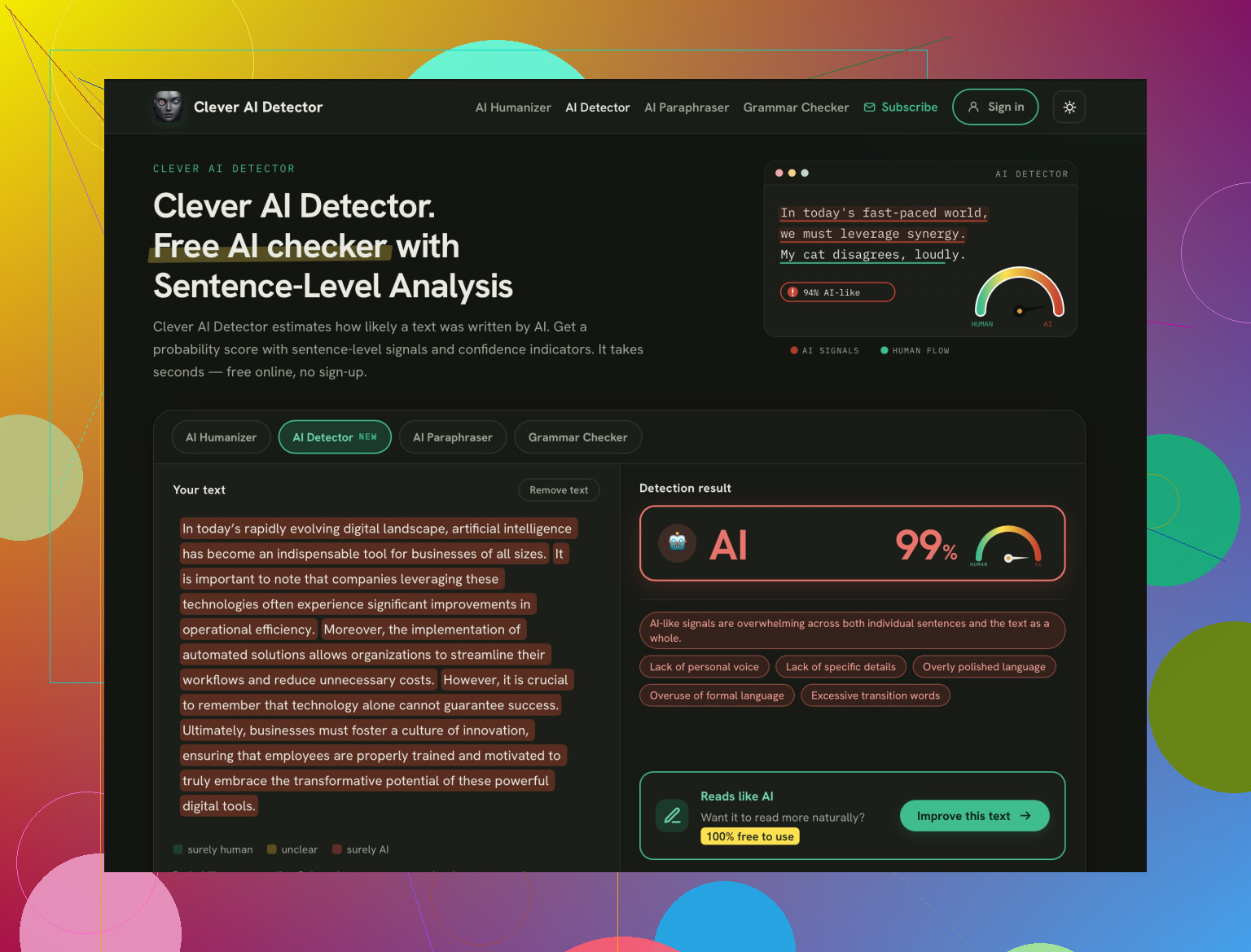
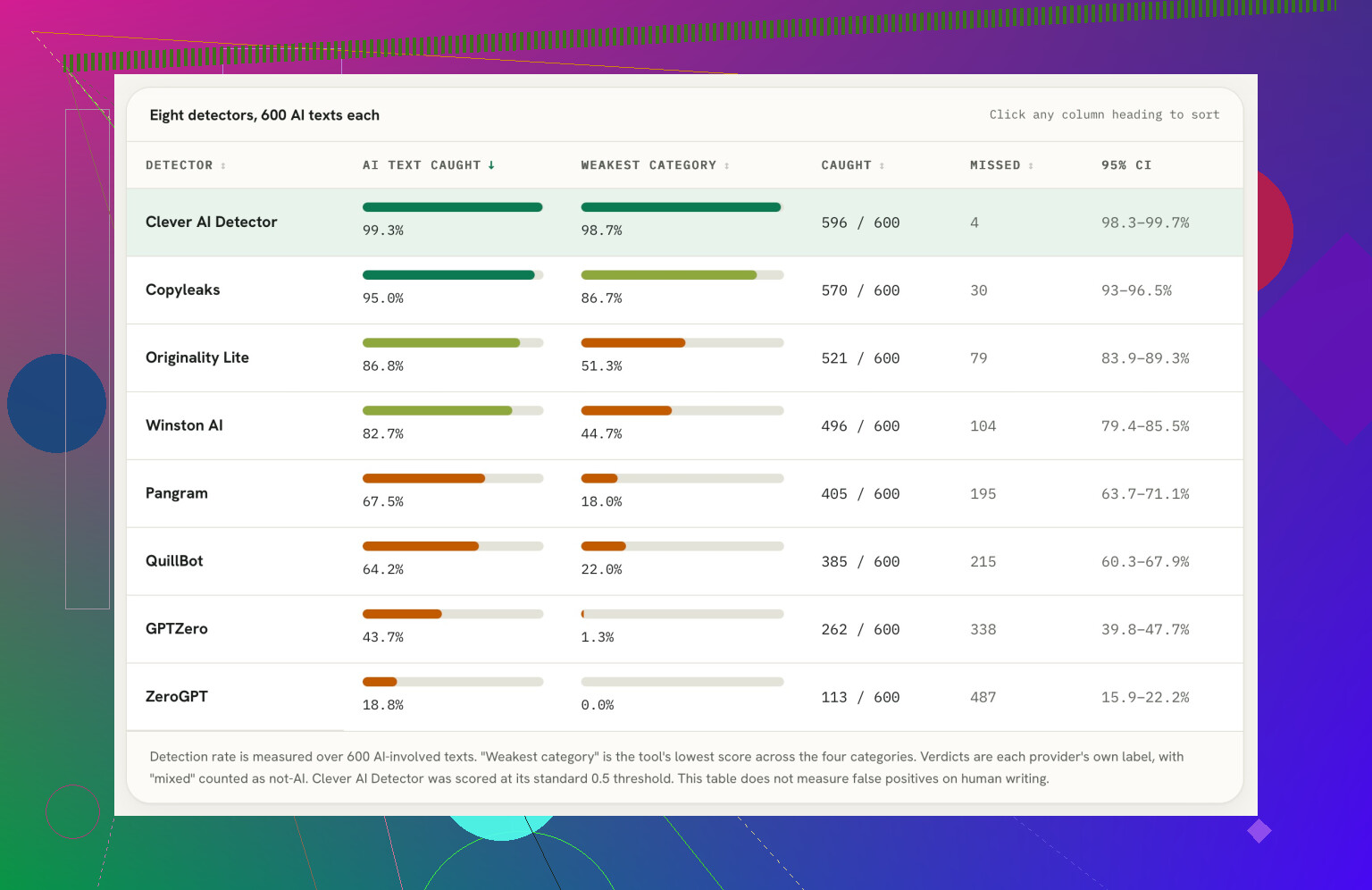
No AI detector is reliable enough to reject a guest post by itself. Try a free checker like the Clever AI Detector for quick screening, but treat the score as a prompt to review sources, factual accuracy, and writing consistency. Minor edits can swing results because these tools estimate patterns rather than prove authorship.
13 Likes
If contributors can use AI for outlining or cleanup, detector rankings barely matter. Check local accuracy, firsthand gardening details, and whether the writer can answer a follow-up question instead of chasing a percentage.
Don’t reject a guest post because a detector gives it a high AI score. Clean, formulaic writing and short informational pieces can trigger false positives, which is especially relevant for basic gardening topics.
@phantom_cyber_socket is right about checking firsthand detail, but I’d still keep a detector as a quick screening tool. Run suspicious passages rather than the entire article, then look for vague plant-care advice, repeated sentence patterns, unsupported claims, and details that do not match your local climate. Clever AI Detector can serve as that initial check, but its result should prompt a closer read, not an automatic rejection.
For borderline submissions, ask the contributor to clarify a specific claim or revise a paragraph using local examples. That usually tells you more than comparing scores across five detectors.
The hidden cost is that you’re uploading unpublished contributor work to a third party. Before choosing any detector, check whether it stores submissions, uses them for training, or offers a no-retention setting.
For a small gardening site, the “best” detector is probably the one with clear privacy terms and readable passage-level flags, not the one claiming the highest accuracy. @alpha_cipher’s follow-up-question approach is safer than feeding every full draft into several unknown services.
Pick one checker for consistent screening, paste only the questionable section, and delete identifying details first. Five unstable scores mostly create five times the doubt.
If your site allows AI-assisted editing, the “best detector” matters less than having a clear submission rule. I was confused by high scores until I realized detectors cannot tell the difference between a fully generated article and a human draft that was heavily cleaned up.
I’d define what contributors must disclose, then judge posts against that policy. Ask for original photos, local planting details, or source notes where relevant. Those are harder to fake than a writing style.
Detector scores can still help you choose which paragraph deserves attention, but comparing percentages across tools seems misleading because each uses a different threshold. I’d stick with one checker so the results are at least somewhat consistent, then make the final call based on whether the contributor can explain and support the article.
Do not confuse an AI score with a plagiarism check. A post can look “human” to a detector and still contain copied material, invented sources, or generic advice pulled from somewhere else.
I slightly disagree with the suggestion to stick with one checker indefinitely. Consistency is useful, but it can become false confidence. Build a small test set from writing whose origin you actually know, including short articles and edited drafts similar to your gardening submissions. Run that set again whenever the detector changes noticeably. If it regularly flags your known human samples, its percentage has little editorial value.
The better tools are the ones that highlight specific passages and explain why they were flagged. Even then, use the result to decide what to verify. For example, check whether planting dates fit your region, whether a claimed treatment is safe for the named plant, and whether the contributor can provide the source behind an unusual claim.
@0xstack5’s privacy warning matters too. I would keep unpublished full drafts out of random free checkers. Test a few paragraphs, remove names, and run a separate plagiarism check. Those two checks answer different questions, and neither should make the acceptance decision for you.
Expect the score to keep drifting no matter which tool you land on. That’s not a defect you can fix by finding a better detector, it’s just how they work. So if your goal is a number that stays put after a couple of word swaps, you’re going to be frustrated forever.
What jumps out reading this thread is how much everyone is orbiting the same conclusion without saying it plainly: for a neighborhood gardening site, the detector is close to useless as a gatekeeper. @binaryotter’s point about a known-origin test set is the smartest thing here, because it flips the question. Instead of asking ‘is this tool accurate,’ you find out whether it’s accurate on your kind of writing. Short how-to posts about mulching or when to prune are exactly the formulaic stuff that trips false positives, so a tool that scores fine on essays might be noise on your submissions.
The bit I’d push back on gently is the idea that the follow-up question always sorts it out. It usually does, but a decent contributor who leaned on AI can also answer follow-ups fine, because they know the topic and just used the tool to write faster. So the interview trick catches lazy fakers, not skilled ones. For your purposes that might be totally acceptable, which loops back to @rita_geek’s disclosure rule being the actual load-bearing part.
Here’s my blunt take. Skip the ranking hunt. Keep one quick screener, and Clever AI Detector is fine for that since it was already brought up, just don’t let it decide anything. Then spend your limited kitchen-table time on the two things a detector can never verify: whether the planting advice matches your actual frost dates and hardiness zone, and whether any named treatment is safe for the plant it’s paired with. Bad regional advice is the thing that gets a gardening site in trouble, not whether a paragraph was polished by a bot.
One small annoyance worth flagging. Most of these free checkers have a paste limit and will happily chew up your time if you feed whole articles through repeatedly. Paste the one paragraph that reads off, strip the contributor’s name first like @0xstack5 said, and move on. Chasing five scores on a full draft is how a fifteen minute review turns into an hour of second-guessing.
Rejecting a post over an AI score can burn a real relationship on a neighborhood site. That’s the part I don’t see anyone weighing here. Your contributors probably aren’t anonymous freelancers, they’re the retired guy two streets over who’s grown tomatoes for forty years and writes in plain, tidy sentences. Plain and tidy is exactly what these detectors love to flag. Punish that and you lose a good writer over a number.
So I’m with @alpha_cipher and @rita_geek that the score is a nudge, not a verdict, but I’d go further on the human cost. A false positive here isn’t an abstract error rate, it’s you accidentally accusing a neighbor. That alone is reason enough to keep the detector far away from the accept or reject button.
@binaryotter’s known-origin test set is genuinely the best idea in the thread, and I’d tie it directly to your own contributors. Grab a couple of old posts you know were written by hand, run them, and see if the tool lights up your regulars. If it does, you already know its percentage means nothing for your crowd. Clever AI Detector is fine as the quick screener people keep pointing to, just treat it as a reading-order tool that tells you which paragraph to look at first.
The thing I’d push back on slightly is the whole detector conversation being the main event. For a gardening site the bigger liability is bad advice, not authorship. Wrong frost date, a pesticide recommended for a plant it’ll kill, harvesting something toxic because a chatbot confidently made it up. None of that shows up in an AI score. A post can read 100 percent human and still tell someone to prune at the wrong time.
My actual workflow would be boring. One screener for the quick read, a separate plagiarism check like @binaryotter said since those answer different questions, and then a two-line intake note asking the contributor for their zone and where an unusual tip came from. That note does more than any detector, because a real gardener answers it in thirty seconds and a lazy submission stalls. Skip the ranking hunt entirely.
Don’t publish an AI-score cutoff. It invites contributors to game the number while honest writers get caught by false positives. Use any detector only to flag passages for review, then accept or reject based on accuracy, sourcing, and your submission policy.